Is Jackpot Raider legit? Licence, UKGC status and trust
 Available in GB
Table of Contents
- Jackpot Raider's current licence record
- The stated UK Gambling Commission position
- The brand currently lists the United Kingdom as restricted
- What a Curaçao licence does and does not tell you
- GAMSTOP and self-exclusion are not the same thing
- Complaints, ADR and local consumer routes
- Reputation is a separate layer from licensing
- How to assess trust without relying on one signal
- A practical trust checklist for UK readers
- Why the UK distinction matters before you deposit
- What the Jackpot Raider licence means for a UK reader
- Key distinction
Section element
Trust and evidence
Three Cats B.V. is named as holder of Curaçao Gaming Authority licence OGL/2024/969/1019. Jackpot Raider says it does not hold a UK Gambling Commission licence, is not integrated with GAMSTOP and lists the United Kingdom as restricted. These concern different aspects of authorisation, access and protection. The full Jackpot Raider review explains the broader casino offer alongside the stated country restriction.
| Area | Detail | Context |
|---|---|---|
| Licence | Curaçao | named holder |
| UKGC | No UKGC licence stated | local status |
| GAMSTOP | Not integrated | brand statement |
| UK access | Restricted | current brand page |
Jackpot Raider’s current licence record
Jackpot Raider’s responsible-gambling material identifies Three Cats B.V. as the holder of Curaçao Gaming Authority Certificate of Operation OGL/2024/969/1019. The company number appearing with the operator information is 164649. These identifying details relate to the operator and its stated Curaçao authorisation; they do not establish a British gambling licence.
That tells a reader who the operator says is responsible for the gambling activity and which regulator issued the operating authority. It does not mean that every protection attached to a UK Gambling Commission licence applies. Licensing facts should be read by jurisdiction: a Curaçao licence is evidence of a Curaçao regulatory relationship, not a substitute label for UK authorisation.
A licence holder and certificate number identify a particular regulatory relationship. They should not be confused with a former operator name, an unrelated company or a separate licence issued for another market. The scope of the authorisation matters as much as the name shown beside it.
The stated UK Gambling Commission position
Jackpot Raider’s responsible-gambling page says that it does not hold a UK Gambling Commission licence. The company’s stated Curaçao authorisation is separate from permission to provide remote gambling services to consumers in Great Britain.
The UK Gambling Commission states that a business providing remote gambling facilities and advertising to consumers in Great Britain needs a Gambling Commission licence. That is the relevant local framework for readers in England, Scotland and Wales. A licence from another jurisdiction does not become a UKGC licence simply because the casino can be viewed from a UK browser or publishes English-language pages.
Neither the presence of English-language pages nor access to the website through a British internet connection establishes UKGC authorisation. The operator states that it does not hold that licence and separately lists the United Kingdom as restricted. Its Curaçao certificate should not be read as local UK approval.
The brand currently lists the United Kingdom as restricted
Current brand-facing responsible-gambling material lists the United Kingdom as a restricted territory and says residents cannot hold an account. That statement matters because it is a direct access signal from the brand, not merely an absence from a regulator whitelist or a third-party review site’s interpretation.
A visible registration button cannot override the operator’s published country restriction. A UK resident should not deposit, use a workaround or send identity documents on the assumption that website access means account eligibility. A country selector or payment option shown globally is not an assurance that a UK account is permitted.
The published country restriction concerns whether a UK resident can hold an account. It is different from the catalogue, mobile format or general payment terms offered in other eligible markets. The restriction should be resolved before any registration, deposit or play.
A casino can advertise a global product, display sterling equivalents and show its sign-up form while maintaining residence restrictions in its terms. None of those interface details overrides the direct statement that UK residents cannot hold an account. The practical consequence is that a person in the United Kingdom should not interpret publicly visible promotions, games or payment brands as permission to deposit. The stated restriction concerns eligibility, not the advertised number of games or the existence of a sportsbook.
What a Curaçao licence does and does not tell you
A regulator-first trust check separates evidence about the operator from evidence about the player’s local protections. The Curaçao record is useful because it identifies the licence holder and operating certificate. It gives a reader a concrete entity and a regulatory jurisdiction to verify rather than relying on branding alone.
The Curaçao licence described by the operator does not confer the UK-specific rights and complaint channels associated with a UKGC-licensed business. A reader should not assume that the protections of one jurisdiction apply merely because the website can be opened from another.
The word “legit” can cover several different questions. A licence identifies an operator’s regulatory status; payout terms describe contractual processes; customer feedback describes individual experiences. None of those alone establishes how every particular payment or complaint will unfold.
GAMSTOP and self-exclusion are not the same thing
Jackpot Raider’s current responsible-gambling page says it is not integrated with GAMSTOP. It separately describes its own account-level tools, including loss limits, cooling-off and self-exclusion. Those are different mechanisms and should not be blurred together.
The UK Gambling Commission describes GAMSTOP ONLINE as a multi-operator online self-exclusion scheme. It also says gambling businesses need their own self-exclusion arrangements. The important distinction for readers is scope: a casino’s internal self-exclusion applies to that operator’s account controls, while GAMSTOP is designed to cover participating UK-licensed online operators through one request.
GAMSTOP is intended to support self-exclusion across participating UK-licensed online operators. Jackpot Raider’s own controls are not interchangeable with GAMSTOP. Anyone who has chosen to self-exclude should not treat the lack of integration as a route back into gambling.
Self-exclusion is intended to interrupt gambling rather than move play between operators. An account-level block applies within the operator’s own system, while GAMSTOP covers its participating online operators. The difference matters particularly when an overseas-licensed website can still be opened in a browser: technical access does not extend the scope of an existing exclusion. The operator’s published statement about GAMSTOP is therefore directly relevant to anyone relying on that protection.
Complaints, ADR and local consumer routes
UK alternative-dispute-resolution arrangements should not be assumed to apply to Jackpot Raider. Its complaint process and regulatory route need to be understood in relation to the operator’s published terms and jurisdiction.
That does not mean every complaint is unresolved or that every user will have a problem. It means the escalation route must be identified from the operator’s current terms and its actual licensing jurisdiction rather than assumed from the reader’s location. Support contact, internal complaint handling and the Curaçao regulatory framework should be checked as separate steps.
For payment disputes, it is also useful to distinguish a contractual disagreement from a bank-card issue, an identity-verification hold or a pending withdrawal inside the operator’s stated processing window. The published withdrawal rules set out payout conditions that an individual complaint may not describe completely.
Different problems call for different forms of account information. A pending request inside the operator’s stated internal window is not the same as a payment already released to a bank or wallet. An identity-document request is different again, because the payment cannot proceed until the required account checks are complete. The transaction history, applicable terms and written support response help distinguish those stages without assuming a particular outcome.
A player who receives a disputed response should identify whether the issue concerns eligibility, account ownership, bonus conditions or the payment rail. The casino’s complaint procedure belongs to its stated operating framework; a UK consumer should not assume access to the escalation system attached to a UKGC-licensed operator. Neither a positive user review nor a regulator badge resolves the details of an individual dispute.
Reputation is a separate layer from licensing
Licensing and player sentiment answer different questions. A regulator record can establish which entity holds a licence and under which jurisdiction. A review profile can show whether recent users are praising support, reporting withdrawal delays or describing access problems. Neither source should be used as a substitute for the other.
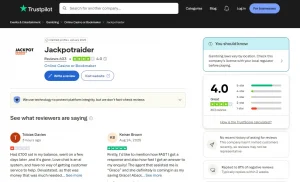
The main Trustpilot profile contains both positive feedback and complaints, including discussion of support and withdrawals. Individual posts describe particular experiences and cannot establish that every account follows the same path.
An allegation about a payment is different from the stated processing period, and a positive cashout report is different from a payment guarantee. The operator’s terms set out the contractual timeframe, while user comments offer personal experience of individual cases.
How to assess trust without relying on one signal
Operator identity, certificate number and issuing jurisdiction determine which regulator is involved. For a UK resident, that information sits alongside the separate question of local authorisation and the operator’s stated country restriction.
The operator’s United Kingdom restriction applies at the account level even if casino pages and promotions are accessible without logging in. Withdrawal, KYC and support arrangements become relevant only to an eligible account.
Customer feedback can reveal repeated complaints and favourable experiences, but its scope is individual. It does not alter the published account restrictions or create a local licence.
A practical trust checklist for UK readers
Start with eligibility. The brand currently states that the United Kingdom is restricted, so verify the live country setting before creating or funding an account. Next, check the operator identity and licence number against current regulator material rather than relying on a footer badge alone.
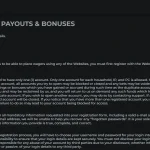
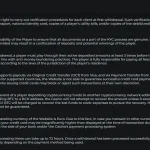
Then read the withdrawal rules before depositing. Jackpot Raider publishes a processing window, same-method requirements and verification controls that can materially affect cashout. Understanding those terms in advance is more useful than trying to infer reliability from a headline rating or a few saved images.
Recent reviews can help identify account and support issues to ask about, but they cannot replace the operator’s written payment conditions or the relevant licensing information.
Why the UK distinction matters before you deposit
For a reader in Great Britain, the licence question is not academic. Local licensing determines which regulator oversees the remote gambling business for the UK market and which local consumer safeguards can be assumed. Without a verified UKGC licence, those assumptions should not be made.
The brand’s own restriction statement makes this even more practical. If a UK resident cannot legitimately hold an account under the current public rules, depositing first and trying to solve eligibility later creates avoidable risk. Country eligibility should be confirmed before payment, bonus activation or KYC submission.
This sequence is especially important where a site is accessible in a browser despite a public restriction. Technical access to a page is not the same as account eligibility. The registration flow and current terms are the relevant checkpoints.
What the Jackpot Raider licence means for a UK reader
The operator information sets out several distinct points: Three Cats B.V. is presented as the holder of Curaçao licence OGL/2024/969/1019, the brand says it holds no UK Gambling Commission licence, the brand says it is not integrated with GAMSTOP, and its current responsible-gambling page lists the United Kingdom as restricted.
For a UK reader, those facts mean local eligibility and local protection should be checked before any account action. The registration status matters before any account action, while player reviews describe individual payment and support experiences.