
Jackpot Raider verification and KYC checks
 Available in GB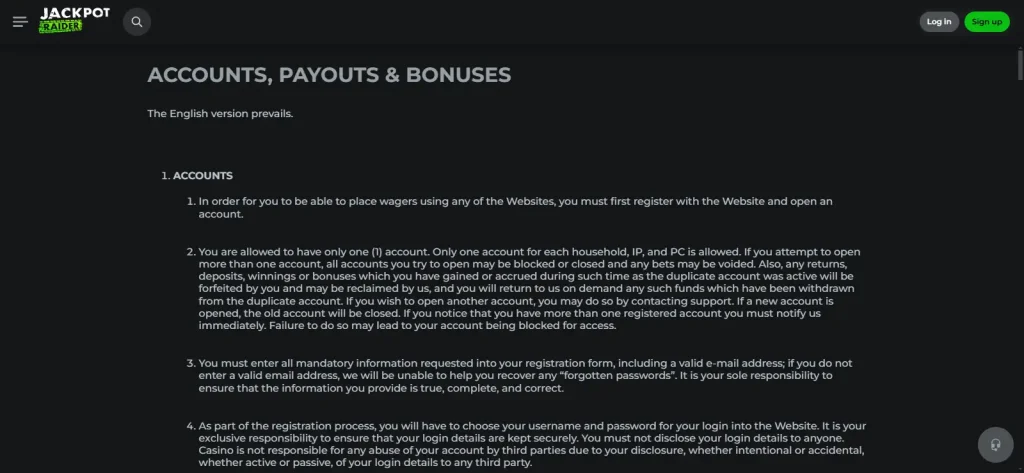
Table of Contents
- KYC starts with identity, address and payment evidence
- First-withdrawal verification can pause a cashout
- Payment verification is linked to the same-method rule
- Additional KYC measures can include selfie, video or phone checks
- How to prepare documents without creating new problems
- KYC does not replace the other withdrawal rules
- UK readers should verify account eligibility before submitting documents
- What usually causes verification friction
- How Jackpot Raider verification connects to your first cashout
- Individual KYC requests
Section element
Account verification
Jackpot Raider’s current terms allow verification at the first withdrawal and can request identity, address and payment-method evidence. They also reserve additional checks such as a selfie, video verification or a phone call. These are possible measures rather than a guaranteed checklist for every account, and no cashout is processed while required verification remains incomplete. The account registration details may later be compared with identity and payment documents.
| Area | Detail | Context |
|---|---|---|
| Trigger | First withdrawal | terms allow checks |
| Evidence | ID + address | possible requests |
| Payments | Ownership check | can be required |
| Cashout | Paused | until verified |
KYC starts with identity, address and payment evidence
Jackpot Raider’s current payout terms say verification can be carried out at the first withdrawal. The published examples include a passport or national identity card, utility bills and copies of debit or credit cards used to deposit. The same terms also allow the operator to ask for payment-system evidence. These examples describe possible checks, not a promise that every player will be asked for every item.
That distinction matters because KYC is risk-based in practice. One account may be resolved with a straightforward identity and address check, while another can trigger an additional payment-method or enhanced verification step. The useful preparation is therefore to keep account details accurate and retain access to the payment method used, rather than trying to predict an identical checklist for everyone.
The current terms also say documents supplied during KYC must be genuine. False or fraudulent documents can lead to serious account consequences, including confiscation of deposits or winnings. Editing a document, hiding relevant data or supplying another person’s evidence is therefore not a shortcut around verification.
First-withdrawal verification can pause a cashout
The payout terms explicitly allow verification procedures at first withdrawal and separately state that no cashouts are processed until the account is fully verified when the operator invokes those checks. That is why a withdrawal request can become the point at which account details, identity and payment ownership are reviewed together.
This should not be confused with the casino’s general withdrawal-processing window. The terms allow up to 72 hours for internal withdrawal processing, but a KYC review is a separate dependency. A guide cannot turn that 72-hour payout rule into a guaranteed verification deadline. The current homepage mentions a 48-hour review claim for submitted documents, yet the safer account-level reading is that the terms do not promise the same completion time in every verification case.
If a cashout is pending because documents were requested, the practical priority is to satisfy the verification request correctly. Repeatedly cancelling and resubmitting a withdrawal does not remove the KYC requirement and can make it harder to understand which stage is actually incomplete.
Payment verification is linked to the same-method rule
Jackpot Raider’s published terms require withdrawals to be made to the same method used for the deposit. That rule explains why payment-method verification can sit alongside identity and address checks. The operator is not only checking who owns the account; it can also check whether the funding and payout route belongs to the verified player.
For card deposits, the terms mention card copies among the potential forms of evidence. Other methods may involve proof that the wallet, bank account or payment service belongs to the account holder. The appropriate format and any masking instructions depend on the operator’s specific request; unnecessary security details should not be disclosed.
Choosing a deposit method you can still access later reduces avoidable friction. The available payment methods depend on the account; the withdrawal process also involves the same-method requirement and payout timing.
Additional KYC measures can include selfie, video or phone checks
The current payout terms reserve the right to use additional identity-verification procedures. They specifically mention a selfie with an identification document as a possible measure when deposits are made. They also allow video verification where required documents cannot be supplied in Latin or Cyrillic alphabets.
The terms further reserve the right to call the phone number recorded on the account and make that call a necessary part of the KYC process. These are escalation tools rather than a fixed sequence that every player completes. Presenting them as optional possibilities is more accurate than publishing a universal step-by-step checklist.
Because these checks use the details stored on the account, stale profile information can create problems. A changed phone number, old address or name mismatch is better corrected through the proper account route before a payout is urgent. Registration details and later KYC are parts of the same account record.
How to prepare documents without creating new problems
A useful KYC file is readable, current and consistent with the account. Identity documents should show the information the operator requested, and proof of address should match the account data where the request calls for it. Payment evidence should demonstrate ownership while following any masking instructions given by the operator or payment provider.
Do not assume that sending more files than requested speeds up the review. Extra documents can add irrelevant personal information and make the case harder to process. The better approach is to respond to the exact request, use the upload fields in the profile or the support route identified by the casino, and keep copies of what was submitted.
If a document is rejected, focus on the stated reason – for example readability, expiry, name mismatch or missing ownership information – rather than repeatedly uploading the same file. That gives support a clearer route to resolving the outstanding check.
KYC does not replace the other withdrawal rules
Passing verification does not by itself make every withdrawal payable. The current terms separately require active deposited amounts to be played through at least three times before withdrawal, and an active bonus can impose its own wagering conditions. Account verification, deposit playthrough and bonus completion are different gates.
The casino also publishes residence-dependent withdrawal minimums and account-specific maximums in the cashier. Those limits are not KYC rules. Keeping the categories separate helps diagnose a blocked cashout: one issue may be identity verification, another may be playthrough, a third may be the selected payment route or account limit.
Accurate registration details make identity checks easier to complete. A withdrawal can involve additional conditions beyond KYC, including the same-method requirement and the operator’s stated processing window.
UK readers should verify account eligibility before submitting documents
Jackpot Raider’s responsible-gambling information lists the United Kingdom as restricted. For a UK resident, account eligibility must be established before sending identity, address or payment documents; the presence of an upload screen alone does not indicate permission to hold an account.
Where an account is eligible, the operator’s published KYC terms describe identity and payment-ownership checks. Those rules do not remove a separate country restriction, and a completed verification process does not itself establish UK regulatory authorisation.
If registration is unavailable for a UK resident, there is no practical reason to submit sensitive verification material. Eligibility comes first; KYC preparation only becomes relevant after a legitimate account can be held.
What usually causes verification friction
The most common avoidable problems are inconsistencies between the account profile and the evidence supplied. A shortened name, an old address, an expired identity document or a payment instrument registered to someone else can all force extra questions because the operator has to connect the same identity across several records.
Image quality matters as well. Cropped edges, glare, unreadable dates or saved images that hide ownership information can make an otherwise valid document unusable. The safest approach is to follow the exact upload instruction shown in the account and provide a clear file rather than repeatedly resizing or editing it.
Verification can also become more complex when several payment methods have been used. Because the withdrawal terms link cashout to the original deposit method, the operator may need enough evidence to establish who controls the relevant card, wallet or account. Keeping a simple funding history can therefore reduce the number of moving parts at withdrawal time.
How Jackpot Raider verification connects to your first cashout
Verification is best understood as the identity layer of the withdrawal process. The account details created at signup, the payment method used to fund the account and the evidence requested at cashout all need to point to the same player. When those elements are consistent, the operator has a clear basis for completing its checks.
The practical sequence is to confirm that the account is eligible, keep registration data accurate, use a payment method you control and respond only to the verification request actually made. After KYC is complete, the separate withdrawal rules – including playthrough, method matching and cashier limits – still apply.
Is Jackpot Raider legit? Licence, UKGC status and trust
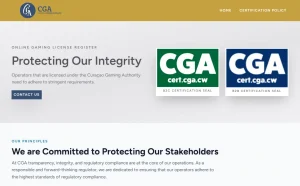
Is Jackpot Raider legit? Licence, UKGC status and trust
Jackpot Raider UK GuideSection elementTrust and evidenceCuraçao licensing details associated with Three Cats B.V. and...

Jackpot Raider Sportsbook and Sports Betting
Jackpot Raider UK Guide Sportsbook guideJackpot Raider sports betting navigation and available market categories.Jackpot Raider...

Jackpot Raider registration, account and login
Jackpot Raider UK GuideSection elementAccount guideJackpot Raider registration form with account details and sign-up options.Jackpot...

Jackpot Raider bonus and welcome offer
Jackpot Raider UK Guide Section elementBonus guideThe advertised Jackpot Raider welcome promotion.Jackpot Raider currently advertises...

Jackpot Raider games and casino library
Jackpot Raider UK Guide Section elementCasino libraryJackpot Raider game lobby with category navigation and title...

Jackpot Raider payments: methods, currencies and cashier
Jackpot Raider UK GuideSection elementPayment guideJackpot Raider cashier with the available payment categories.Jackpot Raider advertises...

Jackpot Raider app and mobile casino
Jackpot Raider UK GuideSection elementMobile guideJackpot Raider mobile navigation and home-screen access.Jackpot Raider currently describes...